
One bad review won’t destroy your business.
But how you handle it might.
That’s why so many companies turn to online review management software. It promises control. Automation. Better ratings.
Some of that is true. A lot of it isn’t.
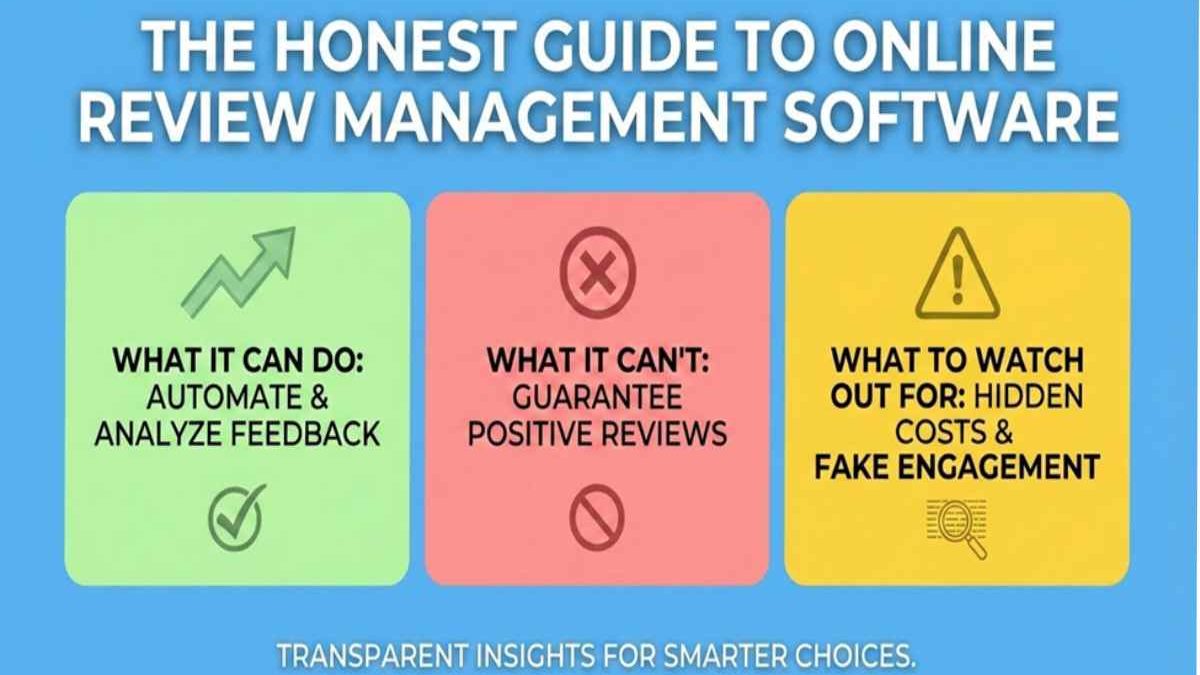
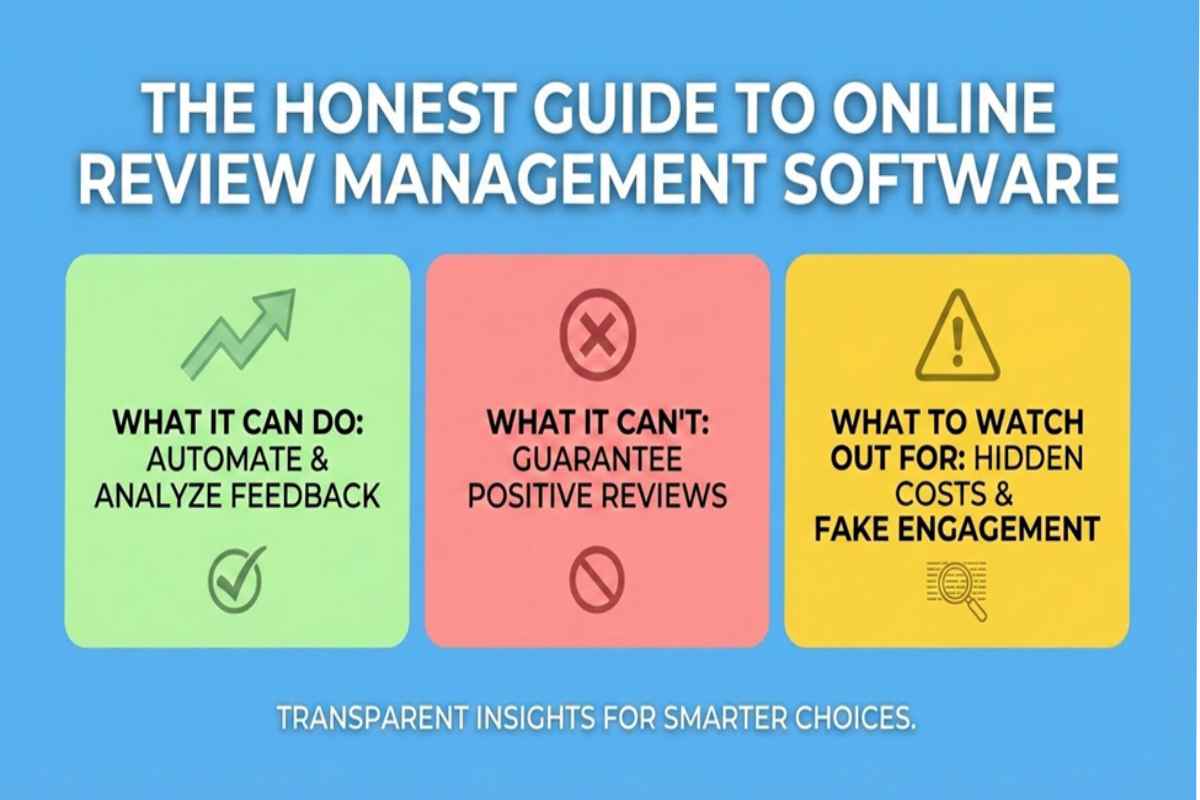
If you’re expecting software to fix your reputation on its own, you’re going to be disappointed. If you understand what it actually does well, it becomes a strong asset.
Table of Contents
What Online Review Management Software Actually Does Well
Let’s start with where it earns its keep.
It Gets You More Reviews Without Chasing People
Most businesses don’t have a review problem. They have a follow-up problem.
The software solves that.
It sends review requests automatically after a purchase or service. Text, email, QR code. The timing is what matters. Catch people when the experience is fresh, and response rates go up.
You’re not begging for reviews anymore. You’re building a system that consistently generates them.
It Shows You Everything in One Place
Reviews don’t live in one place.
They’re spread across Google, Yelp, Facebook, niche sites you probably don’t check often enough. Without a system, things slip through the cracks.
This is where the software is genuinely useful.
You get a single dashboard. New reviews, star ratings, trends. If something negative comes in, you know about it quickly.
That alone changes how fast you can respond.
It Helps You Respond Faster (But Not Better on Its Own)
Most tools now suggest responses or generate them for you.
That saves time. It doesn’t guarantee quality.
If you rely on templates too heavily, your responses start sounding the same. Customers notice. Platforms notice too.
Used properly, these tools give you a starting point. You still need to adjust the tone, reference the situation, and make it feel real.
Speed helps. Authenticity matters more.
It Gives You Useful Patterns, Not Just Data
The real value isn’t the individual review. It’s the pattern.
If you’re seeing repeated complaints about timing, service, or communication, that’s operational feedback. Not just reputation feedback.
Good software surfaces those trends clearly.
Most businesses already have the answers to their reputation issues. They’re just buried in reviews that no one has time to analyze.
What Online Review Management Software Cannot Do
This is where expectations get out of control.
It Cannot Create Real Positive Reviews for You
Any tool that suggests otherwise is a problem.
Fake reviews get flagged. Accounts get suspended. In some cases, businesses are penalized so harshly that recovery becomes difficult.
There’s no shortcut here.
The software can ask for reviews. It cannot control what people say.
It Cannot Guarantee a High Rating
Even if everything is working properly, you’re still dealing with real customers.
Some will leave negative feedback. That’s normal.
If a vendor promises you a specific star rating, they’re selling something they can’t control.
The goal isn’t perfection. It’s consistency and responsiveness.
It Cannot Remove Legitimate Negative Content
Many people assume review software includes removal tools.
It doesn’t.
Platforms decide what stays and what goes. If a review doesn’t violate guidelines, it’s staying up. No software changes that.
What you can control is how you respond and what else ranks around it.
Where Most Businesses Get Burned
The software isn’t usually the problem.
The expectations are.
They Think Automation Replaces Strategy
It doesn’t.
You can automate requests and responses, but if your service is inconsistent, your reviews will reflect that. The software just makes the feedback more visible.
It amplifies what’s already there.
They Over-Automate Responses
You’ve seen it before.
“Thank you for your feedback.”
“Please contact us directly.”
Same tone. Same structure. Every time.
It reads like a script because it is one.
That’s how businesses lose trust while thinking they’re doing the right thing.
They Ignore Negative Review Alerts
This one is more common than it should be.
The system flags an issue. No one responds. Days pass. Now it looks like you don’t care.
Speed matters here more than perfection.
A simple, thoughtful response within 24 hours is better than a polished one a week later.
They Buy More Software Than They Need
Enterprise-level tools look impressive.
They’re also expensive and often underused.
If you’re a single-location business, you don’t need a system built for 200 locations. You need something you’ll actually use consistently.
Overbuying creates friction. And friction leads to neglect.
What to Look for Before You Choose a Platform
You don’t need every feature. You need the right ones.
Look for:
- clean, real-time alerts
- easy review request automation
- simple integration with your existing systems
- reporting you can actually understand
If it takes weeks to learn the platform, it’s already slowing you down.
Where Software Fits Into a Bigger Reputation Strategy
This is the part most vendors don’t emphasize.
Software handles execution. It doesn’t handle positioning.
If negative content is ranking, if your search results are uneven, if your brand presence is inconsistent, review tools alone won’t fix that.
That’s where a broader strategy comes in.
Teams like NetReputation work alongside these tools, not instead of them. The software gathers and manages feedback. The strategy shapes how your brand shows up across search, content, and visibility.
You need both if the stakes are high.
What You Should Expect If You Use It Correctly
Used correctly, online review management software does three things well.
It increases review volume.
It improves response time.
It gives you clarity on what customers are actually saying.
That’s enough to move the needle.
Just not overnight, and not on its own.
The Honest Take
This isn’t a magic tool.
It’s a system.
If your business delivers a strong experience, the software helps you capture and scale that feedback. If your experience is inconsistent, it exposes it faster.
That’s the trade-off.
And once you understand that, you stop expecting the tool to fix your reputation and start using it to strengthen it.