
Table of Contents
Key Takeaways
- SD-WAN boosts network performance with dynamic, intelligent routing across various connections.
- It provides significant cost savings by effectively using less expensive broadband for non-mission-critical tasks.
- Centralized management tools simplify network administration and ongoing optimization.
- Integrated security, such as encryption and segmentation, is a cornerstone of SD-WAN architectures.
- Scalability and agility are enhanced, enabling businesses to adapt quickly to growth and change.
In a competitive digital environment, organizations are exploring new tools to enhance their network performance and security. Among the most impactful innovations is Software-Defined Wide Area Networking (SD-WAN), which equips businesses with flexible and resilient connectivity solutions suited for modern operations. Leveraging managed SD WAN services can further elevate the visibility and scalability needed to meet evolving business needs.
SD-WAN’s virtualized approach addresses common pain points in traditional network management by delivering centralized control, optimizing bandwidth, and improving how critical resources are accessed across multiple sites. With digital transformation accelerating cloud adoption and remote work, SD-WAN stands out as an essential solution to connect locations securely and efficiently.
SD-WAN does not simply replace legacy infrastructure. It provides a scalable and cost-effective way to support hybrid workforces, integrate new branches, and ensure business continuity. Businesses are increasingly turning to this technology to achieve a unified, robust networking environment suited for endless innovation.
This technology brings together advancements in automation and security, enabling IT teams to allocate bandwidth based on real-time application demands and effectively prevent downtime. Its ability to blend multiple connection types helps maximize uptime for critical cloud services and on-premises platforms alike.
Understanding SD-WAN
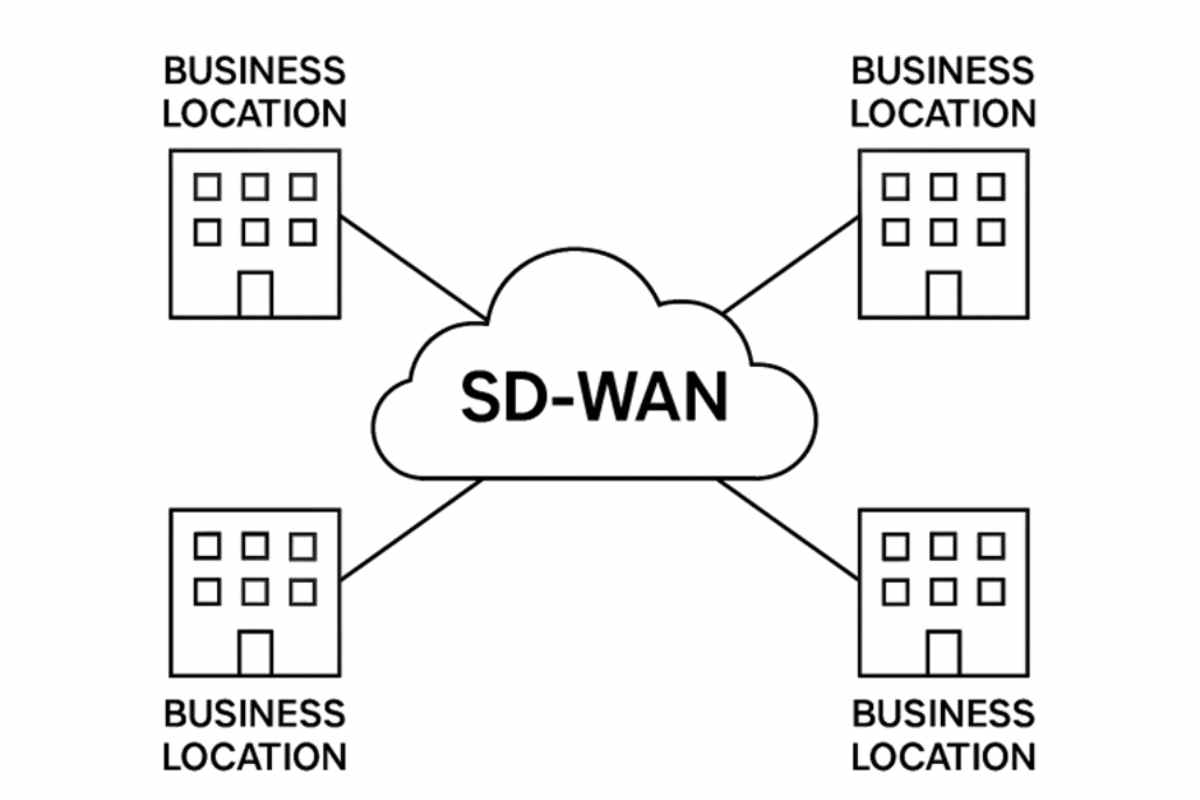
SD-WAN is a software-driven approach to managing wide area networks. Rather than relying solely on proprietary hardware and pre-set connections, SD-WAN creates a virtual overlay that intelligently routes digital traffic according to business priorities and network conditions. This dynamic approach supports broadband, LTE, MPLS, and other links, and allows organizations to take advantage of the best available path for each application.
The shift to SD-WAN is especially relevant as enterprises shift more data and services to the cloud. The software-driven model decouples network management from underlying hardware, providing flexibility, resilience, and scalability. Businesses can support seamless access to cloud applications and data centers with greater speed and less complexity. According to Cisco, this is a crucial differentiator for organizations with geographically distributed operations or hybrid work environments.
Benefits of SD-WAN
- Improved Performance: Through real-time monitoring and application-aware routing, SD-WAN prioritizes mission-critical apps and ensures low latency and high reliability. This delivers optimal end-user experiences whether apps are hosted locally or in the public cloud.
- Cost Efficiency: Utilizing cost-effective broadband and eliminating overreliance on expensive dedicated lines like MPLS helps organizations control expenses while improving bandwidth availability.
- Simplified Management: SD-WAN’s centralized interface allows IT teams to enforce policies, monitor network health, and troubleshoot from any location, reducing administrative overhead.
- Enhanced Security: Built-in security features such as end-to-end encryption and network segmentation protect data during transit and offer an improved security posture for distributed workforces.
- Scalability: Whether opening new sites, onboarding remote teams, or integrating new cloud platforms, SD-WAN makes expansion easier and quicker than traditional WANs.
Implementing SD-WAN: Best Practices
- Assess Network Requirements: Evaluate current performance, assess future demands, and identify which applications are most critical. Thorough assessment ensures technology aligns with strategic goals.
- Select the Right Solution: Choose an SD-WAN that supports your required connectivity types and integrates cleanly with your infrastructure. Vendor reputation and ongoing support should factor significantly into the decision.
- Plan for Security: Prioritize solutions with comprehensive built-in security, including encryption and robust access controls. Consider how SD-WAN will support compliance requirements as well.
- Engage Stakeholders: Garner buy-in from IT, cybersecurity, and business leadership. Cross-functional collaboration ensures no use case is overlooked in the rollout.
- Monitor and Optimize: Use built-in analytics and reporting tools to constantly evaluate traffic patterns, application usage, and potential bottlenecks. Continuous learning and tuning will maximize both performance and security.
Real-World Applications of SD-WAN
Organizations of all types are capitalizing on SD-WAN to unify their networks and accelerate digital initiatives. For example, a global sporting goods company was able to consolidate disparate branch networks post-merger by integrating them into a single SD-WAN overlay. This delivered seamless access to corporate resources and improved the user experience for both cloud and on-premises applications. Another notable use case comes from the financial sector, where institutions require stringent security and uptime. SD-WAN’s granular controls and failover capabilities have proven instrumental in supporting day-to-day operations securely.
SD-WAN and Managed Connectivity
For many organizations, turning to managed SD-WAN services is the key to unlocking the full potential of the technology. Providers bring expert deployment, constant monitoring, and rapid troubleshooting, which frees up internal IT teams for core business projects. Trusted managed services also maintain up-to-date security frameworks and help organizations scale quickly according to business demands, as highlighted by respected sources like Forbes.
Future Trends in SD-WAN
The SD-WAN ecosystem is evolving fast, with significant trends shaping its future impact. Notably, the convergence of networking and security in Secure Access Service Edge (SASE) frameworks is bringing together advanced security tools and unified connectivity. Artificial intelligence and machine learning are also making inroads, driving smarter automation and predictive network monitoring. These technologies are paving the way for fully self-healing networks that anticipate disruptions before they impact business operations.
Conclusion
SD-WAN redefines business connectivity by improving network efficiency, reducing costs, centralizing management, strengthening security, and streamlining scalability. As businesses race to harness cloud technologies and flexible work models, SD-WAN delivers the agility and reliability needed to support the next generation of digital initiatives. Organizations that embrace SD-WAN, particularly through managed services, will be well-positioned to thrive in an increasingly connected world.